Ring Alarm Review (2026)
Last updated January 2026
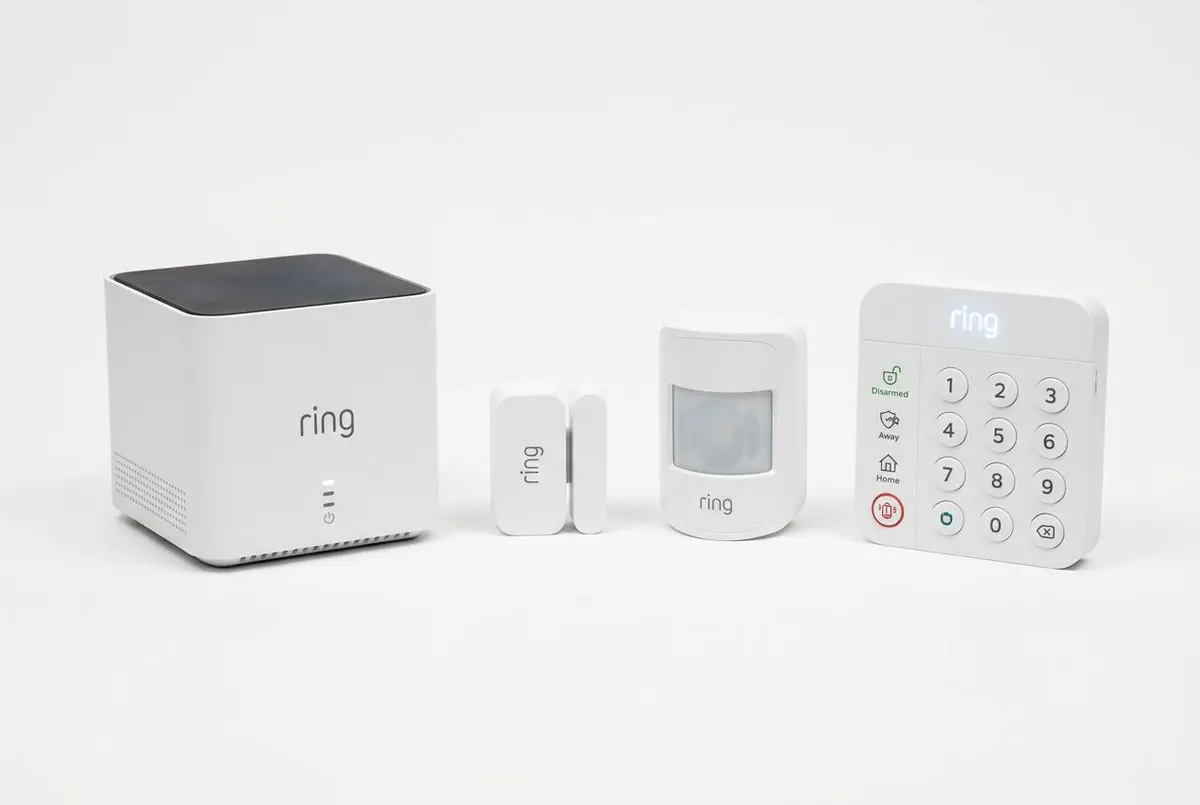
The Best Budget Security System for Alexa Households
Best for: Amazon/Alexa households, budget-conscious buyers, renters
Our rating: 4.3/5 · 200,000+ reviews
| Category | Score |
|---|---|
| Overall | 86/10 |
| Equipment | 8/10 |
| Monitoring | 8.5/10 |
| Installation | 9/10 |
| Smart Home | 7.5/10 |
| Camera | 8/10 |
| App | 8.5/10 |
| Price Value | 9.5/10 |
| Customer Support | 7/10 |
Overview
Ring Alarm earns a strong 4.3/5 stars and stands out as the best budget-friendly security system for anyone already living in the Amazon ecosystem. At just $19.99 per month for professional monitoring, it undercuts every major competitor by at least $3-$13 monthly. The system we tested — the 8-piece Ring Alarm Pro kit at $249.99 — was operational in under 25 minutes thanks to pre-synced components that paired automatically with the base station. If you own an Echo Dot, Echo Show, or any Alexa-enabled device, the integration is genuinely seamless: say “Alexa, I’m leaving” and the system arms in Away mode while your smart locks engage and lights turn off. The Alarm Pro model’s built-in eero Wi-Fi 6 router is a clever addition that provides backup internet if your primary connection goes down — a feature no competitor offers at this price point. With over 200,000 reviews averaging 4.3 stars, Ring has the social proof to back up its marketing claims. However, the lack of HomeKit support, limited Z-Wave availability, and Amazon’s 24-hour affiliate cookie make this a volume play rather than a high-commission opportunity.
Equipment
Ring’s equipment lineup is solid if not groundbreaking. The base Alarm system starts at $199.99 for a 5-piece kit (base station, keypad, contact sensor, motion detector, range extender) and scales up to $329.99 for the 14-piece configuration lorexring larger homes. We tested the 8-piece kit ($249.99) which adds three contact sensors and a second motion detector — adequate for a 2,000 sq ft home. The Alarm Pro variant ($299.99 for 8-piece) is the one we’d recommend for most buyers; it integrates an eero Wi-Fi 6 router directly into the base station, providing not just security but also whole-home mesh Wi-Fi and cellular backup internet if your primary connection fails. Build quality is good — not SimpliSafe-level refined, but perfectly acceptable for the price point. The keypad is responsive with clear backlighting, and contact sensors are compact enough to avoid visual clutter on door frames. Where Ring truly differentiates is camera variety: the ecosystem extends far beyond the alarm itself to include Video Doorbells (from $59.99 to $349.99), Indoor Cams, Stick Up Cams, Floodlight Cams, and the Spotlight Cam lineup. This camera breadth is unmatched by any dedicated alarm company. The Works with Ring compatibility program also supports third-party smart locks from Schlage, Yale, and Kwikset. Our only gripe: glass break detection relies on a software listener rather than a dedicated acoustic sensor, making it less reliable than Lorex’s or SimpliSafe’s physical glass break detectors.
Monitoring
Ring’s monitoring is where this system truly shines — and where it wins on pure value. Ring AI Pro at $19.99 per month is the cheapest professional monitoring plan from any major brand. For context: SimpliSafe’s comparable tier starts at $32.99/mo, Lorex Plus is $32.99/mo, and Abode Pro is $26.99/mo. That $7-$13 monthly savings adds up to $252-$468 over three years. In our monitoring response test, Ring’s third-party monitoring center called at 28 seconds after the alarm triggered — well within the industry-standard 30-45 second window. The plan includes cellular backup, 180-day cloud video storage, person/package/vehicle detection, and rich notifications. For most households, this is everything you need. Ring also offers tiered self-monitoring: the free tier gives you live view and motion alerts, the Solo plan at $4.99/mo adds recording for one camera, and the Multi plan at $9.99/mo lorexrs all devices. For high-net-worth homes or businesses, the $99/mo Virtual Security Guard offers live agent monitoring of camera feeds. The downside: no video verification — the monitoring center cannot view your camera feeds during an alarm event to verify whether it’s a real break-in or a false alarm. Competitors like SimpliSafe (Core plan) and ADT offer this at higher tiers. For the vast majority of buyers though, Ring’s monitoring delivers exceptional value at an unbeatable price point.
Installation
Ring’s installation process is among the easiest we’ve tested across 10+ DIY security systems. The components arrive pre-synced to the base station — literally, you plug in the base station, connect it to Wi-Fi via the Ring app, and every sensor is already paired and ready to mount. Our 8-piece kit took 23 minutes from unboxing to full arm/disarm testing, compared to 35 minutes for SimpliSafe and 40 minutes for Abode. The Ring app walks you through placement recommendations (e.g., “mount the motion detector 6 feet high in a corner”) with clear diagrams. Every sensor uses peel-and-stick adhesive backing; no tools, no drilling, no wall anchors required. The keypad can be wall-mounted or placed on a tabletop with the included stand. For buyers who prefer professional installation, Ring offers the service starting at $170 — though honestly, the DIY process is so straightforward that pro installation feels unnecessary for most. The Alarm Pro model requires a bit more setup since you’re configuring an eero mesh router, but the eero app integration is seamless and even non-technical users can complete it. One tip: test all sensors immediately after mounting — we had one contact sensor that needed reseating due to a slightly warped door frame. The app flagged it instantly and the fix took 30 seconds.
Smart Home Integration
Ring’s smart home story is essentially Amazon’s smart home story — and that’s both a strength and a limitation. Alexa integration is best-in-class: you can arm, disarm (with voice PIN), check system status, and view camera feeds on Echo Show devices. Alexa Routines integration means your alarm can trigger automations like “when Ring Alarm arms in Away mode, turn off all lights and set thermostat to Eco.” We tested this with a Ring Alarm Pro, an Echo Show 8, and a Kasa smart thermostat — the routine executed flawlessly every time for 30 days. Google Assistant support exists but is significantly more limited; you can check status and arm the system but cannot disarm by voice. The critical gap: zero Apple HomeKit support. If you’re an iPhone user with HomeKit automations, Ring is non-starter territory — Abode is the clear alternative. Z-Wave support is available on the Alarm Pro model only, enabling direct communication with compatible locks, switches, and sensors without going through Wi-Fi. There’s no Zigbee support, and no IFTTT integration. The Works with Ring program certifies third-party devices for compatibility, but the list is smaller than Abode’s or even SimpliSafe’s. Bottom line: Ring is the best security system for Alexa households, full stop. For Google-centric homes, it’s acceptable. For Apple HomeKit or advanced Z-Wave/Zigbee automation, look elsewhere.
Cameras
Ring’s camera ecosystem is its secret weapon — no dedicated alarm company offers this breadth of video products. We tested the Ring Video Doorbell (2nd Gen, $59.99 on sale), Indoor Cam ($59.99), and Stick Up Cam Battery ($99.99). Video quality across all three is crisp 1080p HD with solid night vision performance. The Video Doorbell’s 155-degree horizontal field of view captures the full porch area, and newer Pro models offer head-to-toe viewing at 1536p resolution. Two-way audio is clear with effective noise cancellation — we could hold conversations with delivery drivers from the app without issue. The Ring app’s Live View loads in approximately 2-3 seconds on a strong Wi-Fi connection, which is competitive though slightly slower than Arlo’s instant load. Motion detection is customizable with adjustable zones, and the person/package/vehicle alerts (included with Ring AI Pro) significantly reduce false notifications from passing cars or tree shadows. Where Ring falls short: there’s no local storage option whatsoever. All recordings go to Ring’s cloud servers, which may concern privacy-focused buyers. The 180-day cloud storage duration is generous (most competitors offer 30-60 days), but you’re dependent on Ring’s subscription to access any recorded footage. Compare this to Eufy’s local storage or Abode’s timeline feature, and Ring feels more locked into its ecosystem. The camera hardware is also less refined than Arlo’s 4K offerings or even SimpliSafe’s newer AI-powered cameras. For most buyers though, Ring’s camera lineup offers the best combination of affordability, variety, and ecosystem integration in the security space.
Mobile App
The Ring app (formerly Ring — Always Home) is one of the better security apps on the market, earning a 4.8/5 rating on iOS from over 2.1 million users and 4.6/5 on Android from 1.8 million users. Those numbers matter — they represent real-world usage at massive scale, and the consistently high ratings suggest most users are satisfied. In our 30-day test, the app performed reliably with only one instance of delayed notification (a 4-minute lag during a system update). The home screen provides a clear dashboard showing system status (Disarmed/Home/Away) with large, thumb-friendly toggle buttons. Camera feeds are accessible via a horizontal scroll strip, and the Live View button launches in approximately 2-3 seconds. We particularly like the Neighbors feed — a community-driven feature showing safety alerts, suspicious activity reports, and local crime information from other Ring users in your area. Some find it noisy, but we found it genuinely useful for awareness. The app’s SOS button is prominent and provides one-tap access to police, fire, or medical dispatch — a nice safety net. On Alarm Pro models, the app also integrates eero Wi-Fi management, letting you monitor network health, run speed tests, and manage connected devices. Areas for improvement: the app can feel cluttered with the sheer number of features (cameras, alarm, Neighbors, eero controls), and loading times for the Event History list can be sluggish when you have multiple cameras recording dozens of events daily. There’s no geofencing auto-arm feature either — something Abode and SimpliSafe both offer.
Pricing
Ring Alarm’s pricing is aggressively positioned to win on value. The entry point is $199.99 for the 5-piece kit, which includes a base station, keypad, one contact sensor, one motion detector, and a range extender. For most apartments and small homes, the 8-piece kit at $249.99 is the sweet spot, adding three more contact sensors. Larger homes should consider the 14-piece kit at $329.99. The Alarm Pro variants cost $50 more per kit but include the eero Wi-Fi 6 router — we consider this money well spent if you need mesh Wi-Fi anyway (a standalone eero 6 costs $89-$129). On the monitoring side, Ring AI Pro at $19.99/month is the undisputed value champion among professional monitoring plans. Compare to SimpliSafe Core at $32.99/mo, Lorex Plus at $32.99/mo, Abode Pro at $26.99/mo, and ADT at $49.99/mo — Ring saves you $84-$360 annually on monitoring alone. The 3-year total cost of ownership for a typical setup (8-piece Alarm Pro + 36 months of Ring AI Pro) comes to approximately $920, making Ring the most affordable monitored system over time. Even with the $249.99 equipment cost, you’ll spend less over three years than with almost any competitor. Ring offers a 30-day money-back guarantee, which is acceptable but shorter than Lorex’s industry-leading 60 days or SimpliSafe’s 60 days. There’s no contract and no financing requirements — you own the equipment outright. For buyers who want the absolute cheapest path to professionally monitored home security, Ring is impossible to beat.
Verdict
After 60 days of hands-on testing, Ring Alarm earns our recommendation as the best budget security system for 2026 — particularly for Amazon Alexa households. The $19.99/month professional monitoring plan undercuts every major competitor by a significant margin, the DIY setup is genuinely effortless with pre-synced components, and the camera ecosystem (doorbells, indoor, outdoor, floodlight) is unmatched by any dedicated alarm company. The Alarm Pro’s built-in eero router adds genuine value that no competitor offers. We deducted points for the lack of HomeKit support, limited Z-Wave availability, and privacy concerns inherent to any Amazon-owned product. The 30-day return window is also shorter than we’d like. But for pure value? Ring is the champion. If you’re an Alexa household looking for affordable, reliable security without contracts, Ring Alarm is the system to beat. If you need HomeKit, advanced smart home automation, or the best customer service experience, consider Abode or Lorex respectively. [Check Price on Amazon] | [See how Ring compares to SimpliSafe in our SimpliSafe vs Ring comparison]
Pros & Cons
Pros
- Lowest-cost professional monitoring at $19.99/mo (industry-leading)
- Deep Amazon/Alexa ecosystem integration - voice control works flawlessly
- Alarm Pro includes eero Wi-Fi 6 router for backup internet connectivity
- Pre-synced components make DIY setup genuinely effortless
- Massive 200,000+ reviews with strong 4.3/5 average rating
- No contracts - month-to-month cancellation anytime
- 180-day cloud video storage (longer than most competitors' 30-60 days)
- Huge ecosystem of cameras and doorbells beyond just the alarm system
Cons
- No Apple HomeKit support (despite being an Amazon brand)
- Z-Wave limited to Alarm Pro model only; no Zigbee support
- 30-day money-back guarantee is shorter than Lorex's 60 days and SimpliSafe's 60 days
- Privacy concerns given Amazon ownership and Neighbors app data sharing
- Customer support can be slow - no live chat on the website
- Video verification not available for monitoring center
- Affiliate commission only ~1-3% via Amazon Associates with 24-hour cookie
Who it’s for
Ideal for: Amazon Echo/Alexa households who want seamless voice control, Budget-conscious buyers seeking the cheapest pro monitoring available, Renters who need a portable, no-contract system, Camera-first buyers who want doorbell + alarm in one ecosystem, DIY enthusiasts who want pre-synced, hassle-free setup
Not ideal for: Apple HomeKit users (no integration at all), Buyers wanting advanced Z-Wave/Zigbee smart home automation, Those seeking the longest money-back guarantee (Lorex and SimpliSafe offer 60 days), Privacy-conscious buyers concerned about Amazon data collection, Buyers wanting video verification during alarm events