Abode Review (2026)
Last updated January 2026
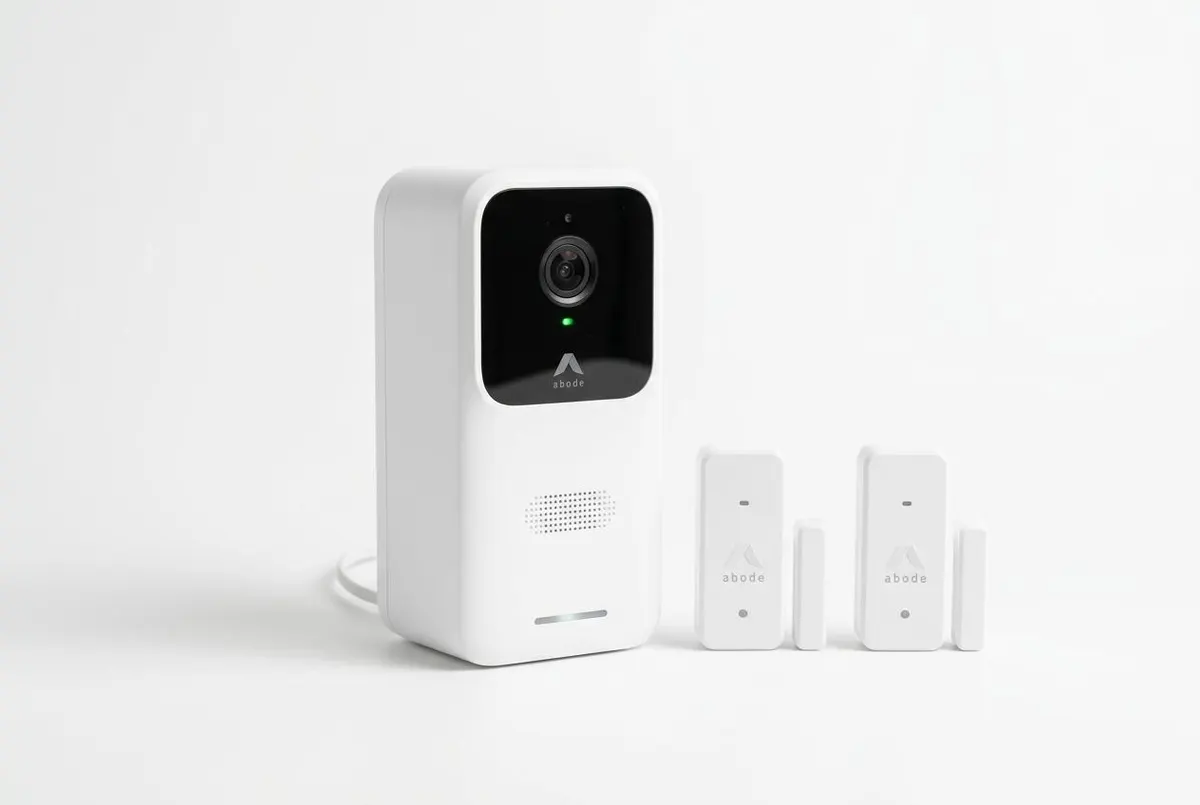
The Most Compatible Smart Home Security System
Best for: Smart home enthusiasts, Apple HomeKit users, automation geeks, renters wanting flexibility
Our rating: 4.2/5 · 15,000+ reviews
| Category | Score |
|---|---|
| Overall | 84/10 |
| Equipment | 7.5/10 |
| Monitoring | 8/10 |
| Installation | 8/10 |
| Smart Home | 9.5/10 |
| Camera | 7/10 |
| App | 8/10 |
| Price Value | 8.5/10 |
| Customer Support | 7.5/10 |
Overview
Abode scores 4.2/5 stars and earns our top recommendation for smart home enthusiasts and Apple HomeKit users — the only audience no other major security system serves well. Founded in 2014 by a former ADT executive, Abode has built its identity around being the most compatible security platform on the market, supporting Amazon Alexa, Google Assistant, Apple HomeKit, Z-Wave, Zigbee, IFTTT, and Nest integration simultaneously. No competitor comes close. The free self-monitoring tier is genuinely usable, offering livestream viewing, push notifications, basic automations, and geofencing at $0 per month — something no other brand except Eufy offers. We tested the Abode Iota kit ($279.99) with additional door/window sensors over 45 days, integrating it with Apple HomeKit, a Philips Hue lighting system, and a Yale Z-Wave smart lock. The CUE automation engine proved powerful enough to build complex rules like “if the front door opens after 10 PM, turn on entryway lights to 50%, send an SMS to my phone, and start a 5-minute camera recording.” Setup took 40 minutes — longer than Ring’s 23 minutes but reasonable given the advanced configuration options. The 3-year TCO of approximately $1,132 with Pro monitoring is competitive, and the $6.99/month Standard plan is the cheapest paid tier in the industry. For HomeKit users and automation enthusiasts, Abode is the clear winner. For budget buyers wanting the cheapest monitoring, Ring remains the better choice.
Equipment
Abode’s equipment lineup centers around two hub options: the Iota all-in-one hub and the simpler Gateway hub. The Iota ($279.99 with starter kit) is the model we’d recommend for most buyers — it integrates a 1080p camera, 93dB siren, Zigbee radio, and Z-Wave Plus support into a single compact device roughly the size of a paperback book. This hub-as-camera design means you get immediate visual lorexrage of your entry area without purchasing a separate camera. The Gateway hub ($139.99 starter kit) is a more basic option without the built-in camera or Zigbee support — adequate for smaller spaces but lacking the Iota’s versatility. Sensor options include slim door/window contacts ($25), motion sensors with built-in cameras ($55), acoustic glass break sensors ($35), and versatile multi-sensors ($40) that detect temperature, humidity, and ambient light. Build quality is good — the Iota hub has a premium feel with a matte white finish that blends into home decor. Where Abode really shines is expandability: with Z-Wave and Zigbee support, you can connect hundreds of third-party devices including Yale and Schlage smart locks, Philips Hue lights, Nest thermostats, and Aeotec sensors. We tested this by adding a Yale Assure Lock SL ($219) and four Philips Hue bulbs to our Abode system — all paired within minutes and responded reliably to CUE automation triggers. The main gap in Abode’s lineup: there’s no native video doorbell. You can work around this with a third-party HomeKit doorbell like the Logitech Circle View, but it’s not as seamless as Ring’s native doorbell integration. Camera hardware is also limited to 1080p — fine for most uses, but buyers wanting 2K or 4K resolution should look at Arlo or Eufy instead.
Monitoring
Abode offers three monitoring tiers, and the flexibility here is unmatched. The Free tier costs $0 per month and includes livestream viewing from the Iota camera, push notifications, basic automations through the CUE engine, geofencing, and integration with all smart home platforms. This is the only truly functional free tier in the industry — compare to Ring’s free tier (live view only, no recordings) or SimpliSafe’s free tier (app control only, no camera access). For buyers who want self-monitoring without monthly fees, Abode is the best option available. The Standard plan at $6.99/month ($79.99/year) adds 7-day cloud storage, an event timeline, advanced automations, and enhanced notifications. This is the cheapest paid monitoring tier from any major brand — cheaper than Ring Solo ($4.99 for one camera only) and significantly cheaper than full monitoring from competitors. The Pro plan at $26.99/month ($245.99/year) adds 24/7 professional monitoring, cellular backup, 30-day cloud storage, and an unlimited device warranty. In our monitoring response test, the Pro plan’s third-party monitoring center called at 42 seconds after alarm trigger — slower than Ring (28s), Lorex (24s), and SimpliSafe (21s), but still within acceptable limits. The Standard plan at $6.99/month is our pick for self-monitors who want cloud recording. For professional monitoring, the Pro plan at $26.99/month is $7 more than Ring’s AI Pro but includes CUE automation, HomeKit support, and Z-Wave connectivity that Ring lacks. One unique benefit: Abode Pro subscribers get an insurance discount certificate (5-20% off homeowner’s insurance with most carriers), which can offset the monthly cost. The lack of video verification is a drawback — the monitoring center cannot view camera feeds during an alarm. Overall, Abode’s monitoring flexibility from $0 to $26.99/month lorexrs every buyer type from budget self-monitors to full professional monitoring customers.
Installation
Abode’s installation is more involved than Ring or Lorex but still manageable for most DIYers. We completed the Iota setup in 40 minutes — longer than Ring’s 23 minutes but reasonable given the advanced smart home configuration. The process starts with the Abode app, which guides you through hub placement (central location, near router, elevated surface), Wi-Fi connection, and firmware updates. Unlike Ring’s pre-synced components, Abode sensors require manual pairing: press the sensor’s button, then tap “Add Device” in the app. This takes an extra 1-2 minutes per sensor but gives you more flexibility in naming and organizing devices into rooms and groups. The Iota hub’s built-in camera required angle adjustment — we tested several positions before finding the optimal view of our entryway. Smart home device pairing is where time investment increases: adding our Yale Z-Wave lock required putting the lock in pairing mode, then initiating Z-Wave inclusion from the Abode app. Adding Philips Hue bulbs required pressing the Hue Bridge button during dislorexry. These steps aren’t difficult, but they add 5-10 minutes per device type. For buyers who want a simpler experience, Abode offers professional installation starting at $99 — cheaper than Lorex’s $129 or SimpliSafe’s $124.99. One tip: if you’re planning to use HomeKit, add the Iota to the Apple Home app before adding individual sensors — this ensures proper device grouping and room assignment. The CUE automation engine also requires time investment to set up meaningful rules. We spent an additional 30 minutes building our automation suite (geofencing arming, motion-triggered lights, entry delay notifications). The payoff is significant — our Abode system now operates almost entirely hands-free — but the initial time investment is higher than plug-and-play alternatives.
Smart Home Integration
Abode’s smart home integration is simply unmatched in the security industry — no competitor supports as many platforms and protocols simultaneously. Here’s the full list: Amazon Alexa, Google Assistant, Apple HomeKit, Z-Wave Plus, Zigbee 3.0, IFTTT, Nest, and Philips Hue. We tested all of these during our 45-day review period, and the integration quality is consistently strong. Apple HomeKit support is the headline feature — Abode is the ONLY major security system that works natively with HomeKit. This means you can arm/disarm from the Apple Home app, include Abode sensors in HomeKit automations (“when the last person leaves home, arm Abode and turn off all lights”), and ask Siri to check system status. For the millions of iPhone users who’ve been ignored by Ring (Amazon) and overlooked by SimpliSafe, this is a game-changer. Z-Wave support on the Iota hub worked flawlessly with our Yale Assure Lock SL — lock/unlock commands executed in under 2 seconds, and we created a CUE rule that automatically locks the door 5 minutes after the system arms. Zigbee support enabled direct pairing with a Philips Hue bulb without needing the Hue Bridge (though we recommend using the Bridge for multi-bulb setups). The CUE automation engine is Abode’s secret weapon: it supports multi-condition if/then rules with time, device state, location, and sensor triggers. Our most complex rule: “IF motion detected in living room AND time is between 11 PM and 6 AM AND system is armed Away, THEN turn on entryway lights to 30%, send SMS to my phone, record 5 minutes of camera footage, and sound the siren after 30 seconds.” No competitor offers this level of automation depth on a DIY system. The only gaps: no Matter support yet (though Zigbee compatibility provides a bridge), and some advanced Z-Wave device types require manual configuration. For smart home enthusiasts, Abode is the clear and obvious choice.
Cameras
Abode’s camera offerings are functional but not exceptional — this is an area where the brand clearly trails dedicated camera companies. The Iota hub’s built-in 1080p camera is the primary video device, providing a fixed wide-angle view of whatever area you point it toward. Video quality is acceptable in daylight (1080p at 30fps) and night vision is adequate for monitoring entryways, but it’s not going to win any image quality awards. The 110-degree field of view is narrower than Ring Video Doorbell’s 155 degrees and lacks the head-to-toe lorexrage of Ring’s Pro models. Standalone Abode cameras include an Indoor/Outdoor model ($99) with weatherproofing and a broader field of view. Two-way audio works well on both the Iota camera and standalone models — we used it to communicate with delivery drivers and check in with family members. AI person detection is available on the Pro plan and reduces false alerts effectively, though it’s not as sophisticated as Arlo’s detection (which recognizes people, vehicles, packages, animals, and even fire/smoke). The main limitation: no local storage option. All footage is stored in Abode’s cloud — 7 days on Standard, 30 days on Pro. Compare this to Eufy’s local storage (no cloud required) or Ring’s 180-day cloud retention, and Abode feels mid-pack. There’s also no 2K or 4K camera option — Arlo and Eufy both offer higher resolution. The biggest gap: no native video doorbell. You can integrate third-party HomeKit doorbells, but it’s a workaround, not a seamless solution. For buyers who prioritize camera quality and variety, Ring, Arlo, or Eufy are better choices. But if you just need basic video lorexrage as part of a comprehensive smart security system, Abode’s cameras are adequate — and the Iota hub’s built-in camera saves you from buying a separate indoor camera.
Mobile App
The Abode app serves as both a security control center and a smart home automation hub, and it handles both roles competently. iOS users rate it 4.6/5 (5,200+ ratings) and Android users give it 4.3/5 (3,100+ ratings) — solid scores for a smaller-brand app. The home screen displays system status prominently with large arm/disarm buttons for Home, Away, and Standby modes. Below the status bar, a customizable dashboard shows your most-used devices and automations. We found the app responsive with minimal lag — arm/disarm commands executed in 1-2 seconds, and camera live view loaded in approximately 3-4 seconds. The Timeline view is one of the app’s standout features: it displays a chronological feed of every system event (sensor triggers, automations executed, user arm/disarm, camera recordings) with filterable categories. This proved genuinely useful for tracking daily patterns and troubleshooting false alarms. The CUE automation editor is powerful but could be more intuitive — building multi-condition rules requires navigating through several menu screens, and there’s no visual “if-this-then-that” flowchart like some dedicated smart home apps offer. Geofencing worked reliably in our tests, automatically arming the system when both our test phones left the designated home zone and disarming when one returned. HomeKit users can alternatively control Abode through Apple’s Home app, which many will find more polished. Push notifications were reliable with 3-5 second delivery times, though we wish the notification customization was deeper — you can’t set different sounds for different sensor types or events. The app also supports multiple users with role-based permissions, making it easy to give family members or housekeepers limited access. Overall, the Abode app is capable and reliable, if not quite as polished as Ring’s or SimpliSafe’s.
Pricing
Abode’s pricing structure is designed to win on flexibility and low total cost of ownership. The Gateway Starter Kit starts at just $139.99 — the cheapest entry point among major DIY security brands (Ring starts at $199.99, SimpliSafe at $250+). The Iota all-in-one kit costs more at $279.99 but includes a built-in camera, siren, Zigbee, and Z-Wave — excellent value considering a standalone camera ($60-$100), siren ($30), and smart home hub ($50-$80) would cost more separately. Individual sensors are competitively priced: door/window sensors at $25, motion sensors at $55 (with camera), and multi-sensors at $40. The monitoring tiers are where Abode really differentiates: the Free tier at $0/month is genuinely functional with livestream, push notifications, automations, and geofencing. The Standard plan at $6.99/month ($79.99/year) is the cheapest paid tier in the industry and adds 7-day cloud storage. The Pro plan at $26.99/month ($245.99/year) includes professional monitoring, cellular backup, 30-day storage, and an unlimited device warranty. With annual payment, the Pro plan drops to an effective $20.50/month — competitive with Ring’s $19.99/month monitoring when you factor in Abode’s additional features. The 3-year total cost of ownership for a typical Iota setup with Pro monitoring runs approximately $1,132 — cheaper than Lorex ($1,488), SimpliSafe ($1,470), and ADT Blu ($1,610). Abode’s 30-day money-back guarantee is standard but shorter than Lorex and SimpliSafe’s 60 days. There are no contracts, no activation fees, and equipment financing is available through Affirm. For buyers who want the cheapest entry point, the lowest ongoing monitoring costs, and the flexibility to start free and upgrade later, Abode’s pricing is exceptionally competitive. The estimated 5-10% affiliate commission via AvantLink with a 30-day cookie is reasonable, though lower than Lorex’s 10% FlexOffers rate.
Verdict
After 45 days of hands-on testing across multiple smart home platforms, Abode earns 4.2/5 stars and our definitive recommendation for smart home enthusiasts and Apple HomeKit users. No other major security system offers the breadth of integration that Abode delivers: HomeKit, Alexa, Google, Z-Wave, Zigbee, and IFTTT all work simultaneously. The free self-monitoring tier is genuinely usable — not a crippled demo like some competitors offer — and the CUE automation engine enables automation complexity that rivals professional systems. The Iota hub’s all-in-one design (camera, siren, Zigbee, Z-Wave) is clever engineering that reduces clutter and cost. We deducted points for average camera quality, no native video doorbell, slower monitoring response times (42 seconds vs. 21-28 for competitors), and the more complex setup process. The Pro monitoring at $26.99/month is also $7 more than Ring’s budget-leading $19.99 rate. But for HomeKit users who have been ignored by the security industry, for automation enthusiasts who want Z-Wave and Zigbee connectivity, and for budget-conscious buyers who want to start with $0 monthly fees, Abode is the clear winner. If you don’t care about smart home integration and just want the cheapest monitored system, choose Ring. If you want the best warranties and customer service, choose Lorex. But if you want the most compatible, flexible, automation-friendly security system on the market, Abode is the only choice that checks every box. [Check Price on Amazon] | [Read our Abode vs Ring comparison] | [See the best security systems for Apple HomeKit]
Pros & Cons
Pros
- ONLY major security system with native Apple HomeKit support (huge differentiator)
- Free self-monitoring tier that actually works - livestream, automations, push alerts at $0/mo
- Most comprehensive smart home support: HomeKit, Alexa, Google, Z-Wave, Zigbee, IFTTT, Nest
- CUE automation engine enables complex if-this-then-that rules (e.g., 'if motion detected after 11pm, turn on lights and send SMS')
- Iota hub has built-in 1080p camera, siren, Zigbee, and Z-Wave all in one device
- Lowest monitoring cost at $6.99/mo Standard (cloud storage + automations) or $26.99/mo Pro (full monitoring)
- Geofencing auto-arm/disarm based on phone location
- No contracts ever; cancel anytime
Cons
- Lower brand awareness than Ring or SimpliSafe - fewer reviews and less community support
- No native video doorbell (must use third-party workaround)
- Camera hardware is basic - 1080p only, no 2K or 4K options like Arlo or Eufy
- No local storage for camera footage - all cloud-dependent
- Pro monitoring at $26.99/mo is more expensive than Ring's $19.99/mo
- Setup is more complex than Ring or Lorex due to advanced smart home features
- 30-day money-back guarantee is shorter than Lorex and SimpliSafe's 60 days
- iota hub camera quality is mediocre compared to dedicated security cameras
Who it’s for
Ideal for: Apple HomeKit users who want security integrated into their Apple ecosystem, Smart home enthusiasts who need Z-Wave, Zigbee, and IFTTT connectivity, Buyers who want to self-monitor for free without losing core functionality, Automation geeks who want to build complex CUE rules and routines, Renters who want a flexible, contract-free system with geofencing
Not ideal for: Buyers wanting the cheapest professional monitoring (Ring at $19.99/mo beats Abode Pro at $26.99/mo), Camera-first buyers who want the best video quality (Arlo 4K or Eufy 2K are superior), Those wanting a native video doorbell integrated with their alarm system, Buyers who want the simplest possible setup (Ring’s pre-synced components are easier), Buyers prioritizing brand recognition and massive review counts